


A Quick Guide to Text Marketing for Ecommerce Businesses
A quick-start guide to SMS marketing for ecommerce brands. Learn why text outperforms email by 15x and how to launch your first campaign.
Text marketing is one of the most effective channels ecommerce brands can use to drive sales and deepen customer relationships.
If you’re still on the fence, there are plenty of reasons to give it a shot. First and foremost, text marketing has been shown to work. If you saw my article breaking down the hugely successful WineText operation, you probably noticed their results. Gary Vaynerchuk stated their text list is outperforming their email list by around 15x.
SMS marketing reaches your audience more immediately than email and, if you’ve got the right strategy in place, prompts them into action. Why should ecommerce marketers pay more attention to text? Here’s my quick guide:
What does text marketing look like in 2026?
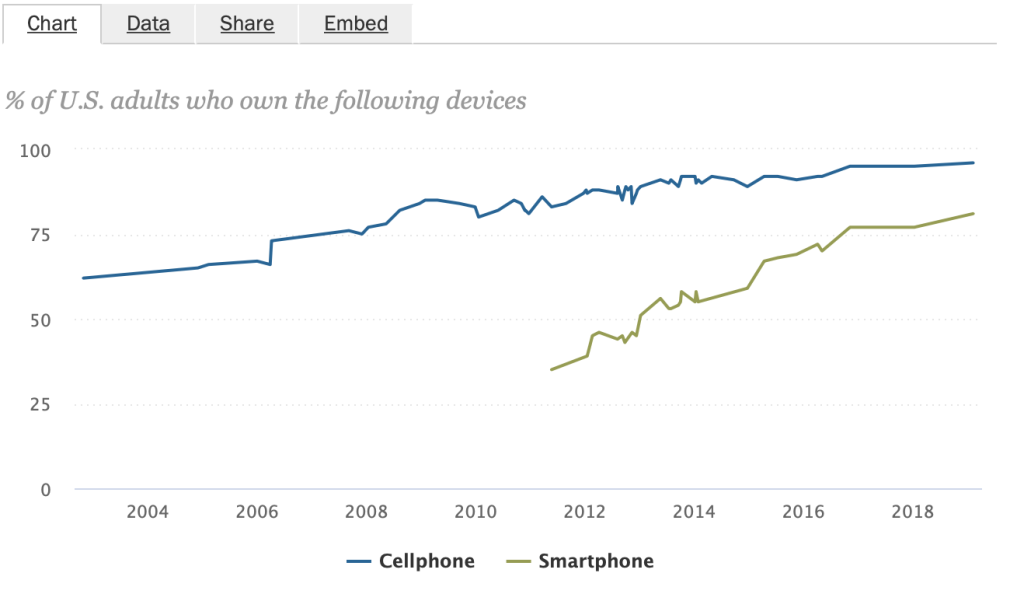
To begin with, almost every consumer now owns a mobile phone. Data from Pew Research shows that at least 96% of Americans own a cellphone, while 81% own smartphones. This means that virtually any ecommerce store can reach their target customers via text.
One of the big questions for marketers then becomes: do our customers actually want to receive text messages? In 2025, 84% of consumers opted in to receive texts from businesses, a 6% year-over-year increase. Preferences vary by message type -- consumers still lean toward email for newsletters and product previews, but SMS wins for time-sensitive offers and transactional updates like shipping confirmations.
The engagement numbers tell the rest of the story: 98% of texts get opened, compared to roughly 30.7% for email (and even that email figure is inflated by Apple Mail Privacy Protection). 95% of texts are responded to within three minutes, and on average, Americans check their phones once every 10 minutes.
This represents a huge opportunity for ecommerce businesses. You have the ideal combination of reach with the technology, plus strong consumer preference for the channel. The question is how well you harness that opportunity.
Does text marketing work?
In a word, yes. As we’ve seen with WineText, text marketing works because it meets customers where they already are -- their messaging app, not a crowded inbox. Text messages get opened at dramatically higher rates than email and prompt faster action. Even if people don’t read their messages immediately, around 98% are opened by the end of the day.
The numbers back this up. Brands using text-to-buy see an average of $2.01 in revenue per message and 5.5% conversion rates on drops -- far above typical ecommerce email benchmarks. On average, ecommerce marketers generate around $71 for every dollar spent on SMS.
SMS may not be for every brand though -- I’m not saying to write off email yet! There are some important characteristics that make it work for Gary Vee and others who are using it successfully:
-
You need an engaged audience who will opt in willingly. In fact, Gary Vaynerchuk has spoken of WineText subscribers complaining when they didn’t get their daily text offer!
-
You need an audience that prefers their updates via text. This will vary from business to business. You might find a majority prefer text, or maybe very few. It’s worth investigating among your own target audience.
-
You need to make subscribing to your texts worthwhile. WineText has a clear value-add for customers who join their SMS list. For them, access to daily wine deals is well worth being signed up.
-
You need to find the right cadence for sending text messages. This will vary between businesses. WineText sends a daily message, while some businesses send one or two messages per week. You need to find the optimum number of texts for your business -- send too few and people forget who you are!
What are the benefits of text marketing?
First of all, there’s an important concept for both text marketing and email marketing that all businesses should grasp: owning your own audience. Text marketing means you build a list of recipients that you own. You can reach out to them at any time, no matter what is happening, and you’ll reach most people on your list.
On the other hand, if you rely on platforms like social media, that’s an audience you do not own. Ad reach and organic reach on social platforms are at the whims of the social media company. There has been a well-documented decline in organic reach for businesses on social media, and even with the targeting abilities of their paid ad platforms, you still depend on how they apply it and decide to show your ad. An owned audience means you don’t deal with these reach issues.
Engagement is another key benefit. People on your SMS list are far more likely to see your messages and stay aware of your brand, even if they only respond once in a while. SMS campaigns see a 45% response rate, compared to roughly 6% for email -- a gap that widens further when you factor in how many emails never get opened at all.
Given that text messaging has immediate delivery, it’s also an excellent medium for time-sensitive or urgent messages. Running a flash sale? Texting gets the message out faster than email. This alone can be a compelling reason for customers to join your SMS list -- if deals are limited, they’ll hear about them first via text.
Beyond one-off campaigns, features like order bumps and rollovers let you maximize every message. An order bump prompts customers to add a related item when they reply to buy, while rollovers automatically re-offer unsold inventory to the next segment on your list. Both increase revenue per send without requiring additional messages.
What are some text marketing best practices?
Are there some best practices for text marketing? Yes, but as always, it’s important to test and modify for your own audience. Here are a few examples:
- Get permission. This isn’t just a best practice, it’s part of the regulations (which I will dive into in a later article). The people you send text messages to must explicitly give their permission.
- Use proper text marketing tools. These allow you to segment your audience and send messages that are more relevant to them. With a text-to-buy platform like AudienceTap, customers can reply to a text to purchase instantly -- no links, no cart, no checkout page.
- Use SMS marketing to improve the customer experience. For example, by sending updates to let them know the status of their order and expected delivery.
- Try adding images to text! This can add interest for the customer and more easily communicates what your offer is.
- Make sure your texts add value for the customer. There’s got to be a good reason for them to respond to texts and to remain a subscriber. This also makes good business sense: you pay to send out text messages, so it’s never a great plan to send them “just because!”
- Keep your messages short and clear. You’ll be limited by the number of characters you can use anyway, so it’s important to be concise. Consider highlighting the key purpose of your message, such as in caps at the beginning (SPECIAL OFFER, 1-DAY DEAL) etc.
- Understand your audience. One of the keys to successful text marketing is to know why your audience is there, what they expect and what will keep them engaged. This might involve some trial and error, but when you’ve worked it out, it’s a good idea to apply a consistent strategy. And hey, if you end up in the position of WineText where people complain that they didn’t get a text message, you’re probably doing something right!
Where can you get started with SMS marketing?
The best way to get started with text marketing is with a platform built for selling, not just sending. Look for tools that help you build your subscriber list, automate promotions, segment your audience, and -- most importantly -- let customers buy directly from a text message. If your SMS tool still requires customers to click a link and go through a checkout page, you're leaving money on the table.
Book a demo with AudienceTap to see how text-to-buy can work for your brand.
AudienceTap is a text-to-buy platform that lets customers purchase products by replying to a text message — no links, no carts, no checkout pages.
With reply-to-buy purchasing, AI-timed replenishment drops, abandoned cart recovery, and list growth tools, AudienceTap turns SMS from a traffic channel into a sales channel. Brands on the platform average $2.01 in revenue per message and 5.5% conversion rates on drops.
Talk to a text-to-buy expert to see what your SMS revenue could look like.